
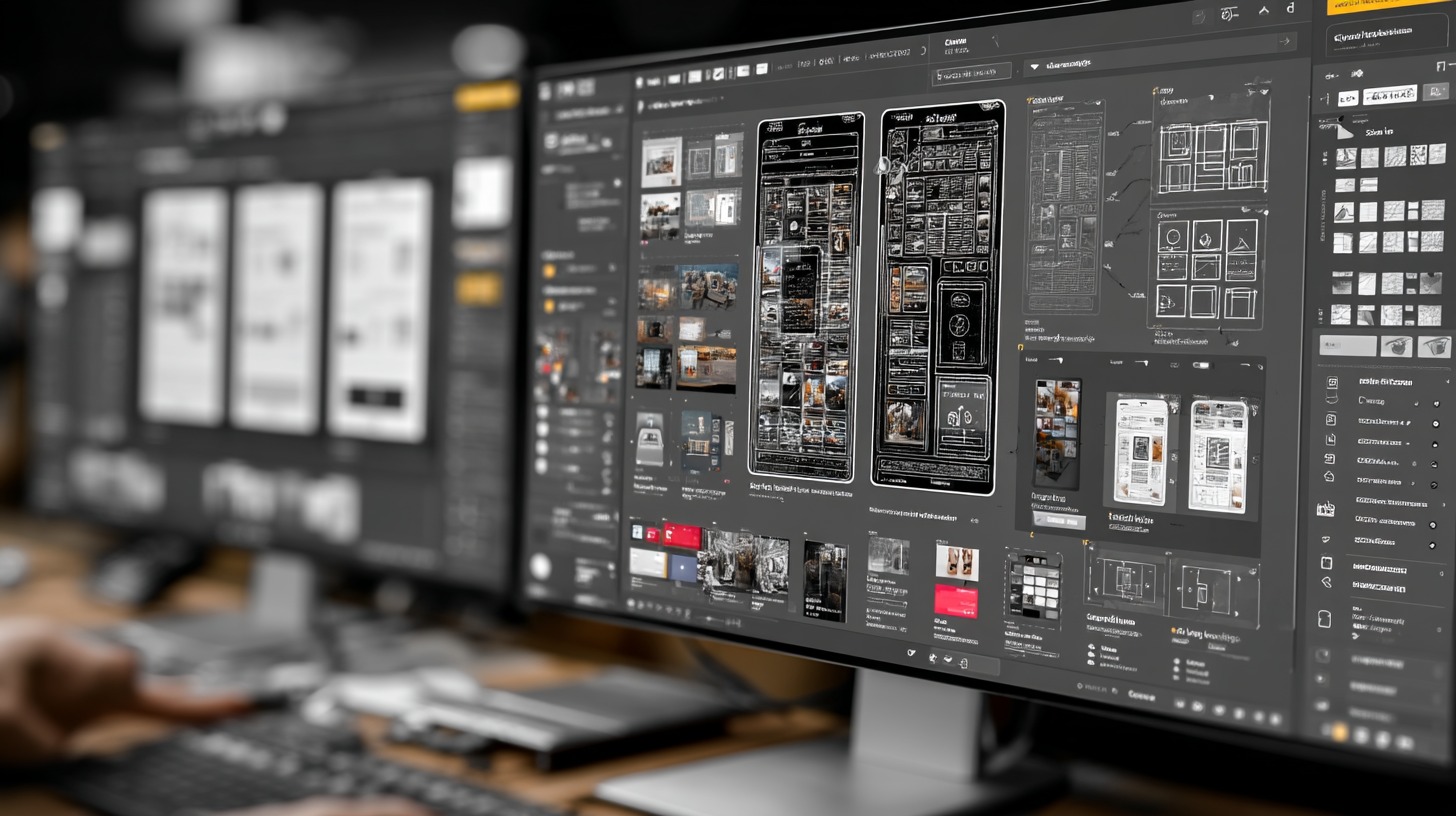
In today’s digital world, a functional product isn’t enough. Users expect smooth interactions, appealing visuals, and intuitive features from every app, website, and piece of software they use. This is where User Interface (UI) and User Experience (UX) design come in. Together, they form the foundation of how people perceive and interact with your digital product, heavily influencing its success.
What is UI and UX design?
Before we dive into why they’re important, let’s define these terms:
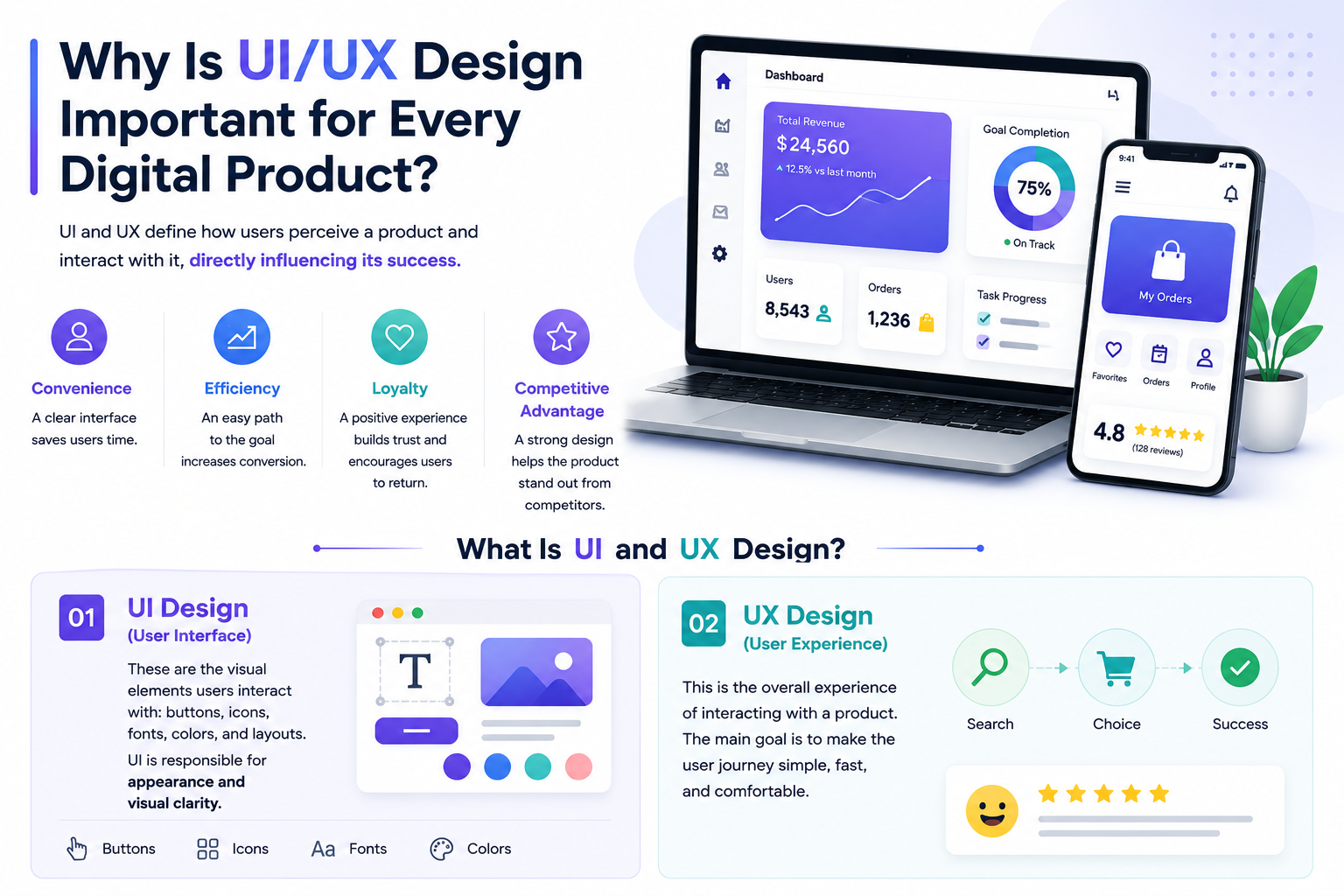
- User Interface (UI): This covers the visual elements users interact with, such as buttons, icons, colors, typography, and the overall layout. It’s all about the aesthetics and look of your product.
- User Experience (UX): This refers to the overall feeling of the experience. It measures how easy, efficient, and enjoyable it is for a user to accomplish their goals with your product.
Simply put, UI attracts users, while UX keeps them engaged.
1. First impressions matter
Users decide whether to stay on your platform within seconds. A clean, attractive interface builds immediate trust, while a cluttered or confusing layout can drive them away. Effective UI/UX design ensures your product makes a strong first impression, encouraging users to explore further. Research shows that 94% of first impressions are design-related.
2. Boost user satisfaction and retention
A well-designed experience makes users feel understood and valued. When people can navigate your app or website easily and without frustration, they’re more likely to return. Positive experiences build loyalty, turning one-time visitors into repeat customers. Great UX is about providing consistency, clarity, and purpose.
3. Increase conversion rates
The success of your digital product often depends on its conversion rates, whether that means user sign-ups, sales, or subscriptions. User-centered design creates a clear path for users to reach their goals. Clear call-to-action buttons, simple navigation, and an intuitive user flow all contribute to higher conversions and business growth. Companies that invest in UX can see their conversion rates increase by up to 400%.
4. Lower development costs and time
Investing in user research and design from the start reduces the need for costly redesigns later. Usability testing and early prototyping help identify potential problems before they become expensive mistakes. This efficient approach saves time and resources for both developers and stakeholders.
5. Strengthen your brand perception
Your product’s design is a direct reflection of your brand’s values and professionalism. A consistent and polished interface communicates quality and trustworthiness. When users associate your brand with a positive experience, they are more likely to recommend it to others, which helps grow your reputation organically.
6. Improve accessibility and inclusivity
Good UX design ensures that everyone, including people with disabilities, can use your product. Prioritizing accessibility with features like readable fonts, proper color contrast, and screen-reader compatibility not only widens your audience but also demonstrates social responsibility.
7. Provide crucial insights
Through user research, data analysis, and feedback collection, UX design helps you understand how real people interact with your product. These insights drive continuous improvement and innovation, keeping your product relevant and competitive.
8. Gain a competitive edge
In a crowded digital market, excellent UI/UX design can set you apart. Users naturally gravitate toward products that are easy and enjoyable to use. Investing in superior design isn’t a luxury; it’s a strategic advantage.