

Cloud computing delivers IT resources like networking, databases, and software over the internet, allowing organizations to access technology without physical infrastructure.
The history of cloud computing
The idea of cloud computing began in the 1960s when Professor John McCarthy predicted computing would become a public utility. In 1969, the Pentagon commissioned ARPANET, the first version of the internet, to connect computers and share information over long distances. In the 1970s, IBM used virtualization to connect multiple virtual machines to one host. By the mid-1980s, around 100,000 computers were on the internet.
The 1990s saw mobile devices and remote access become standard, and tech leaders began using the term “cloud.” The early 2000s brought major advancements, driven by Amazon’s online store. The 2010s saw the rise of microservices and receptacles, making cloud services widely available. Today, the cloud powers most organizations’ operations.
The current state of cloud computing
The international cloud computing market was valued at $500 billion in 2023. Managed services providers (MSPs) offer various “as-a-service” models (XaaS), letting businesses customize service offerings. Over 41% of leaders plan to increase cloud investments, and another 33% are moving from legacy systems to cloud-based tools.
Current trends in cloud computing
Organizations are adopting multi-cloud or hybrid environments to maximize technology while meeting security standards. Key trends include:
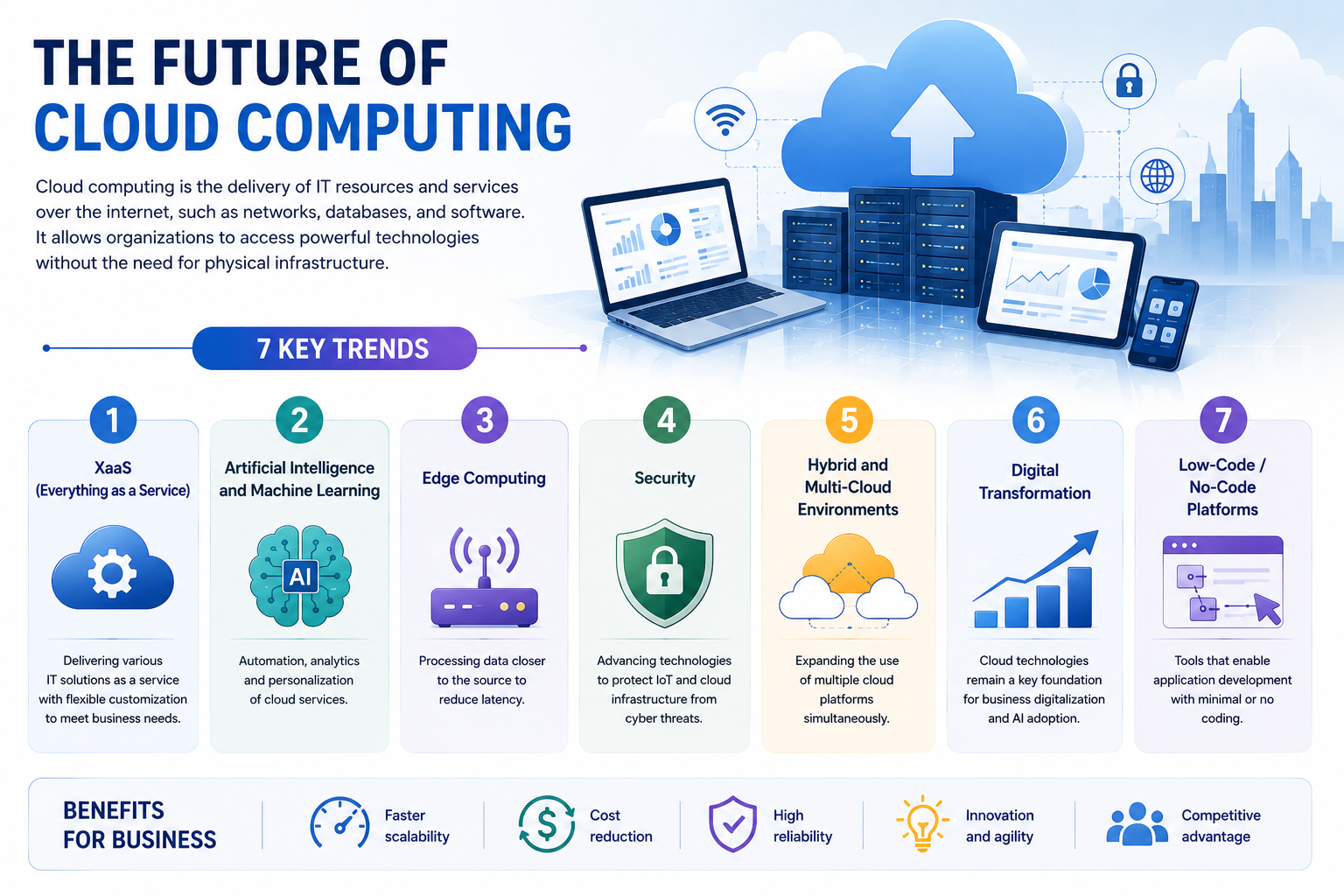
- XaaS: This model guides service delivery as organizations customize cloud services.
- AI and ML: Automation and personalization are enhancing the cloud.
- Edge computing: This reduces latency for cloud-based systems.
- Security: Enhancements are strengthening the Internet of Things (IoT) against cyberattacks.
- Multi-cloud and hybrid environments: Increased adoption is enhancing flexibility.
- Digital transformation: The cloud remains a key driver of digital transformation and AI expansion.
- Ease of use: Low-code/no-code options are empowering organizations to own their software.
Cloud automation
Cloud automation improves system flexibility by reducing manual work and human error while making resource use more efficient. Automating routine tasks helps systems run more effectively and allows organizations to integrate their technologies for greater efficiency.
The future of cloud computing: predictions and future trends
The destiny of cloud computing will leverage emerging technologies to improve speed, security, and productivity.
Edge-to-cloud
The edge-to-cloud model uses edge computing to process data on peripheral devices instead of a central server, improving security and reducing latency.
Quantum computing
Combined with the cloud, quantum computing creates powerful new capabilities. Many see the cloud as the ideal way to access the immense processing power required for quantum algorithms.
Secure Access Service Edge (SASE)
SASE simplifies multi-cloud environments by providing fast, reliable, and secure connections between users and technology, regardless of location.
Green cloud
Green cloud computing aims to reduce technology’s environmental impact, primarily by lowering energy consumption.
Multi-cloud and hybrid cloud
These models provide needed adaptability. Oracle reports that 76% of large companies will adopt this approach by 2024.

Serverless computing
Serverless computing lets companies run code without managing servers, saving costs and helping them “avoid vendor lock-in, enhance resilience … and select ideal features,” according to Adonay Cervantes, CTO of CloudBlue.
Next-generation user interfaces
Cloud computing will enhance user interfaces with personalization and immersive augmented reality (AR) and virtual reality (VR).
IoT devices
The Internet of Things (IoT) will become more prevalent, with interconnected devices playing key roles in healthcare, urban living, and farming.
AI
AI relies on the cloud’s vast data capabilities and will continue to play a larger role, enabling everything from data-driven insights to personalized experiences.
Cloud security
Cloud security must evolve. JumpCloud reports that nearly 70% of organizations have experienced incidents from security misconfigurations. Improving data protection is crucial.
Will AI replace cloud computing?
No, AI and cloud computing will work together. The cloud will use AI to become faster and safer, while AI will use the cloud’s data to train its models.
The future of cloud computing across industries
Cloud computing offers diverse capabilities for many industries:
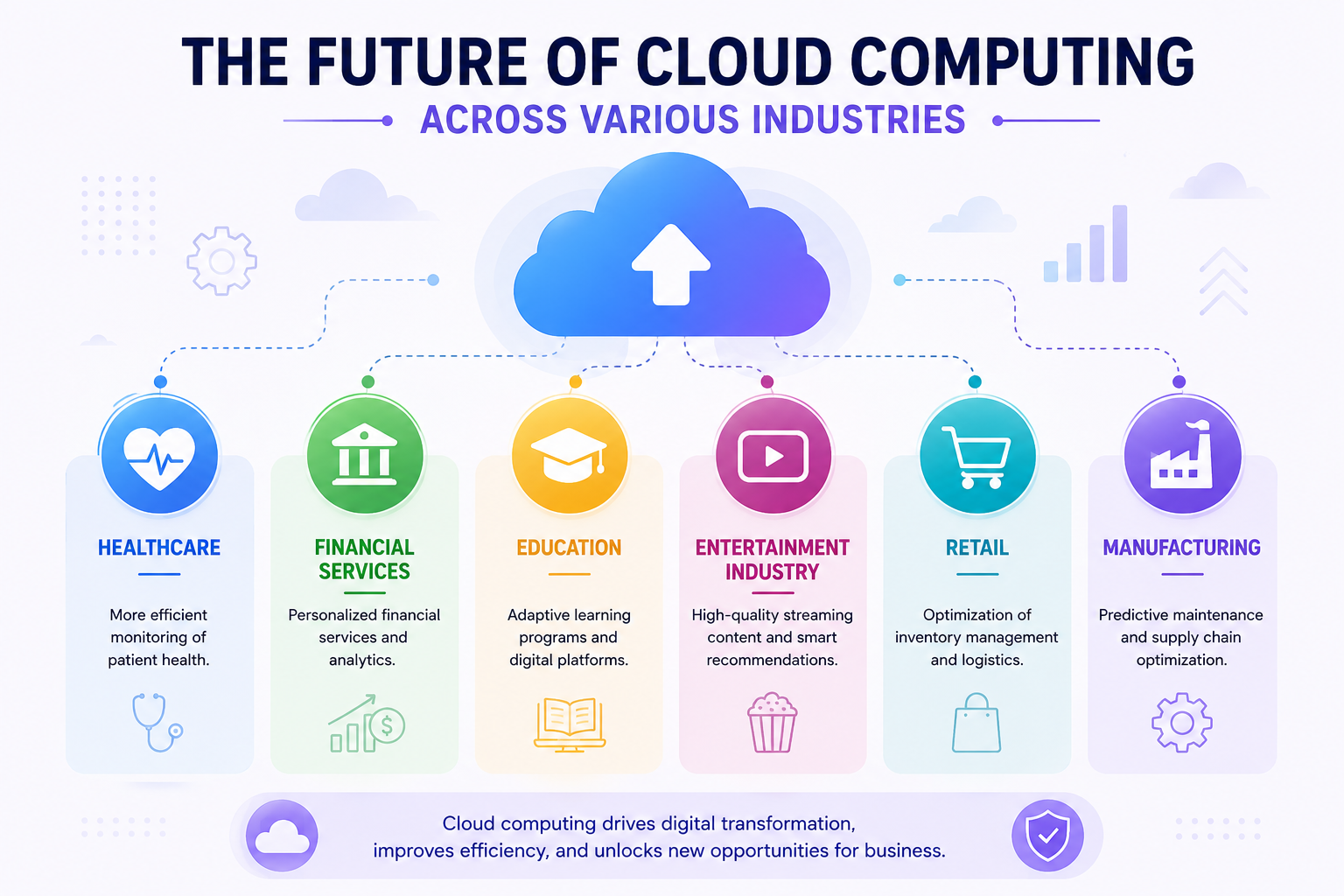
- Healthcare: Better patient monitoring.
- Finance: More personalized financial management.
- Education: Individualized learning experiences.
- Entertainment: Low-latency streaming and recommendations.
- Retail: Revolutionized inventory management.
- Manufacturing: Predictive maintenance and better supply chain management.